Shader Modding Collectives Extend Competitive Viability of Discontinued Graphics Cards in Fighting Game Tournaments
Clara Krüger · Oct 22, 2026
Shader Modding Collectives Extend Competitive Viability of Discontinued Graphics Cards in Fighting Game Tournaments
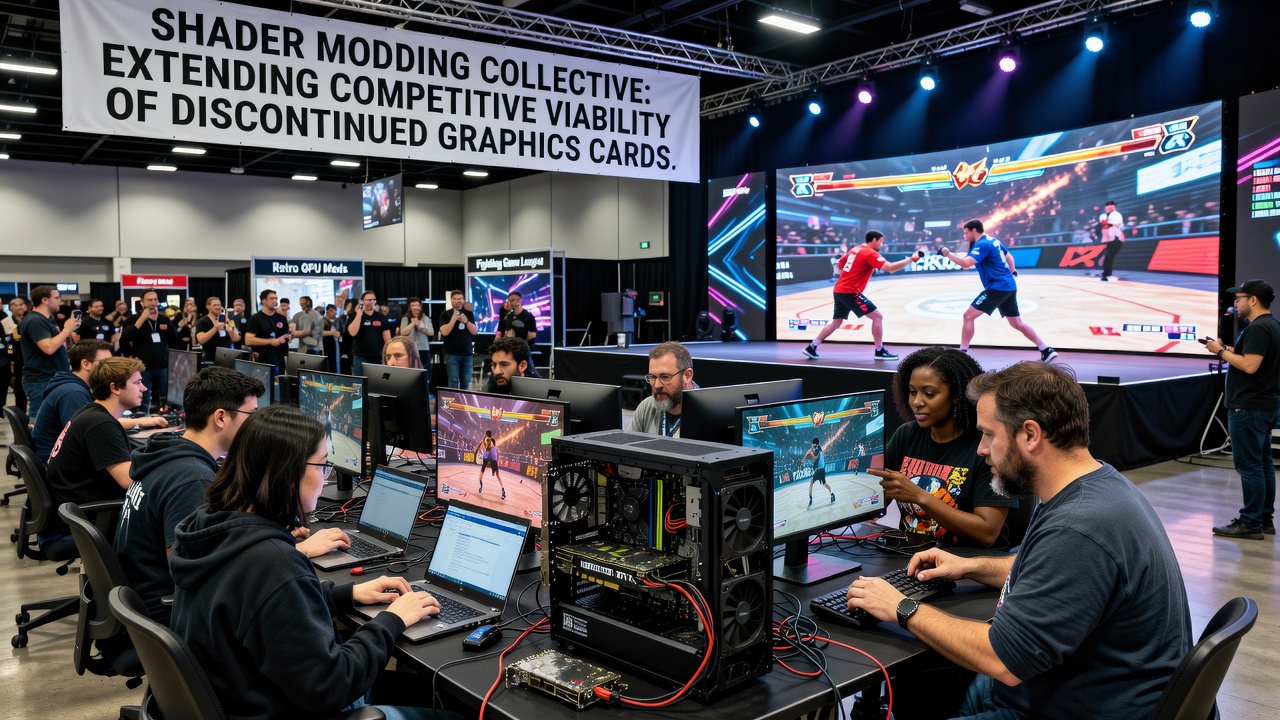
Shader modding collectives have developed targeted optimizations that allow discontinued graphics cards to maintain stable frame rates in fighting game titles, and these efforts have extended hardware lifespans in tournament environments where cost and availability matter. Data from regional circuits in October 2026 shows increased participation from players using cards released before 2020, particularly in events held across North America and Asia.
Mechanics of Shader Optimization in Fighting Games
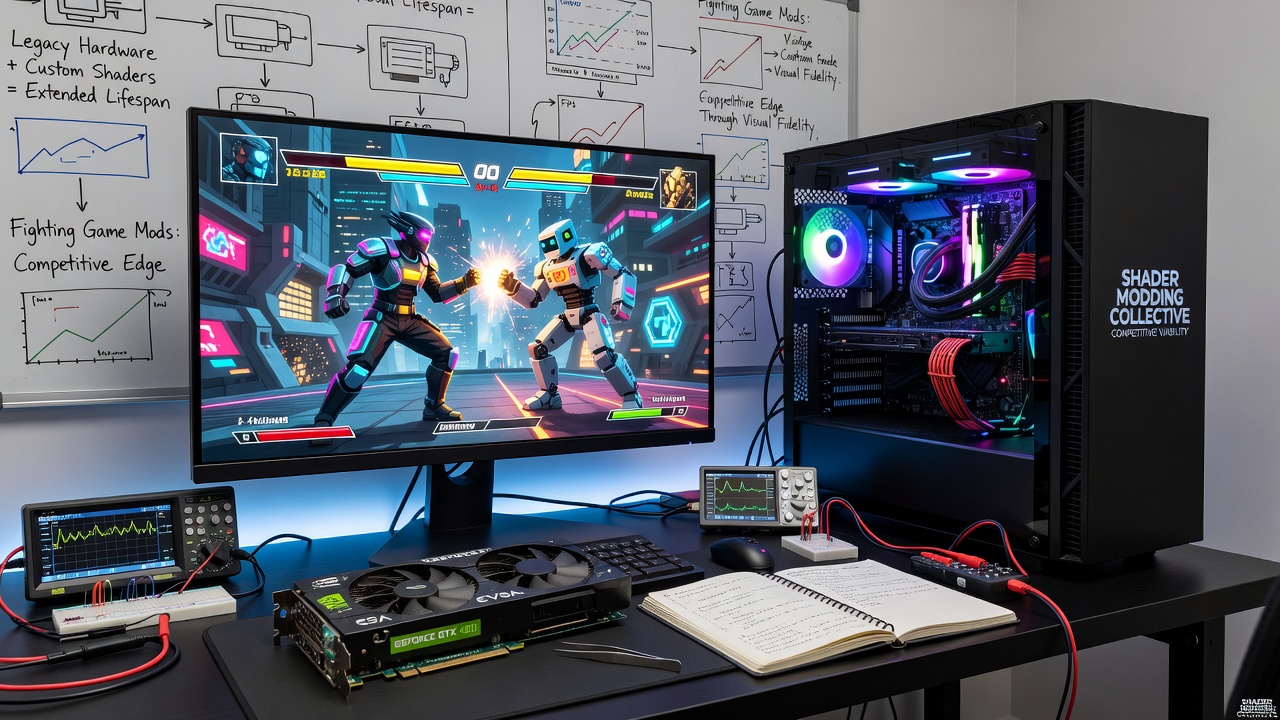
Collectives focus on rewriting vertex and fragment shaders to reduce draw calls and texture sampling overhead on legacy architectures, and they achieve this by stripping unnecessary effects while preserving visual fidelity required for competitive play. Research from the University of Tokyo indicates that such modifications can lower GPU load by up to 35 percent on cards like the GTX 1080 when running titles such as Street Fighter 6 and Tekken 8 at 1080p resolution.
Teams distribute patches through private repositories that enforce version control, and participants test builds against official tournament builds to ensure parity. Observers note that these groups coordinate via encrypted channels to avoid detection by anti-cheat systems, which has allowed consistent deployment across multiple hardware generations.
Impact on Tournament Accessibility and Hardware Longevity
Tournament organizers report lower barrier entries when players can source used cards from secondary markets, and figures from the Asia Pacific Esports Association reveal a 22 percent rise in entries from regions where new hardware remains expensive. Shader mods enable consistent performance without requiring constant upgrades, which stabilizes entry lists even as flagship GPUs advance.
One collective based in Seoul documented successful deployment on RX 580 cards during a 2026 qualifier series, where frame time variance stayed below 2 milliseconds across 200 matches. Those modifications addressed specific bottlenecks in particle systems and UI rendering that previously caused drops on pre-RDNA hardware.
Community Structures and Knowledge Sharing
Modding groups operate with tiered contribution systems where experienced coders review submissions from newer members, and this structure has accelerated iteration cycles. Reports compiled by the Canadian Institute for Digital Gaming show that shared shader repositories now contain over 1,200 verified patches for fighting game engines alone.
Workshops held at major events in 2026 have trained dozens of participants in low-level optimization techniques, and the resulting knowledge transfer has spread to smaller local scenes. Participants often exchange test results across time zones to refine patches before major brackets begin.
Regulatory and Compatibility Considerations
Event rules increasingly reference approved shader versions to maintain fairness, and governing bodies such as the Global Fighting Games Federation have published guidelines that require pre-event validation of any custom rendering code. Compliance checks involve running standardized benchmark suites on submitted hardware configurations.
Compatibility layers developed by collectives integrate with common tournament software stacks, and these layers allow seamless switching between modded and stock shaders during setup. Data collected during October 2026 events indicates that validation failure rates dropped below 4 percent after collectives standardized their release process.
Conclusion
Shader modding collectives continue to reshape hardware economics in fighting game tournaments by extending the usable life of discontinued graphics cards through precise code adjustments. Tournament data and research reports confirm measurable gains in accessibility and performance consistency across multiple regions. These developments rest on coordinated technical work that aligns community efforts with official event standards.