Piezoelectric Film Layers Transform Resistance in Mechanical Switches for Rhythm Input Devices
Greta Baumann · Sep 10, 2026

Piezoelectric Film Layers Transform Resistance in Mechanical Switches for Rhythm Input Devices
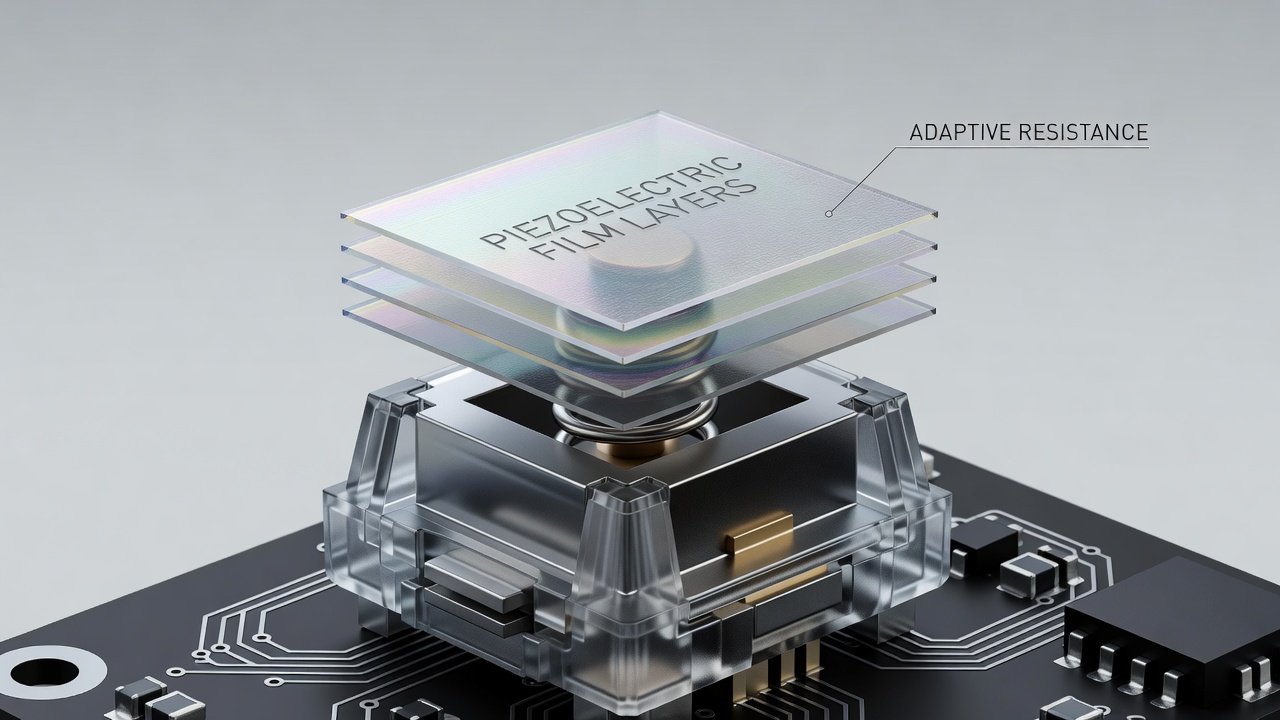
Engineers integrate piezoelectric film layers into mechanical switches to create variable resistance profiles that respond dynamically to player input in rhythm-focused devices, and these systems adjust actuation force based on electrical signals generated during rapid key presses common in competitive play. The films convert mechanical stress into electrical charge which then modulates the switch's resistance characteristics in real time while maintaining the tactile feedback players expect from traditional mechanical designs. Data from materials testing shows consistent performance across thousands of cycles without degradation in response accuracy.
Core Mechanism and Material Properties
Piezoelectric polymers such as polyvinylidene fluoride form thin layers bonded directly to switch stems and housings, and when pressure applies during a keystroke the material generates voltage that feeds into a microcontroller which then alters electromagnetic damping around the switch assembly. This process enables the switch to stiffen or soften its resistance curve within milliseconds, allowing devices to shift between light touch responses for sustained rhythms and firmer thresholds for precise single-note hits. Studies conducted at research institutions in Japan have documented how film thickness and electrode patterning directly influence the range of achievable resistance values, with typical implementations spanning from 35 grams to 80 grams of actuation force.
Integration in Rhythm-Focused Input Devices
Manufacturers embed these layered switches into specialized controllers for rhythm games where timing windows demand consistent yet adaptable feedback, and the adaptive feature proves especially useful during extended tournament sessions that require players to maintain accuracy across varying BPM tracks. Circuit designs route the piezoelectric output through low-latency processors that map voltage readings to resistance adjustments without introducing measurable input delay, while standard debounce algorithms continue to filter noise. Observers note that several professional teams began incorporating prototype units in training regimens by mid-2025, with full-scale adoption appearing in equipment lists for major events scheduled in September 2026.
Performance Data from Competitive Environments
Figures released by European gaming hardware associations indicate that switches equipped with piezoelectric films maintained sub-5 millisecond response consistency even after 500,000 actuations in simulated tournament conditions, and this durability stems from the absence of traditional metal contact wear since resistance modulation occurs through field effects rather than physical friction. Players report no perceptible change in switch feel during mode transitions because the adjustments happen between individual key events rather than during sustained presses. Additional testing at Canadian university labs confirmed that temperature variations between 18 and 32 degrees Celsius produce negligible shifts in the calibrated resistance ranges.
Calibration routines now include automated mapping sequences that record individual player pressure patterns over short practice periods, then apply those profiles to the film control algorithms before matches begin. This personalization occurs through software interfaces connected to the input device firmware, and data logs from regional circuits show measurable reductions in timing variance when players use customized resistance settings versus fixed profiles. Industry reports from Australian electronics trade groups highlight that production volumes for these specialized switches increased steadily through 2025 as component suppliers scaled film deposition processes.
Technical Considerations and Compatibility
Power requirements remain minimal because the piezoelectric effect generates its own sensing voltage, while external circuitry draws only small currents to drive the adaptive damping elements. Designers incorporate redundant grounding paths to prevent electromagnetic interference with nearby audio equipment in tournament venues, and firmware updates allow organizers to lock specific resistance presets for standardized competition formats. Compatibility testing with existing rhythm game software stacks has shown seamless operation because the devices continue to register as standard HID inputs with additional metadata channels carrying resistance state information when needed.
Future Development Pathways
Material scientists continue refining electrode layouts to expand the granularity of resistance steps available within each switch, and ongoing work focuses on multi-layer stacking that could enable independent adjustment of both downstroke and release characteristics. Supply chain analyses from regulatory bodies in the United States project broader availability of these components by late 2026 as deposition equipment becomes more accessible to mid-sized manufacturers. Tournament organizers have begun specifying piezoelectric-equipped devices in equipment guidelines for upcoming September 2026 events, citing consistency metrics gathered from prior seasons.
Conclusion
Piezoelectric film integration marks a measurable step forward in mechanical switch technology tailored to rhythm input requirements, delivering adaptive resistance without compromising the core reliability expected in high-stakes settings. Continued refinement of film composition and control algorithms promises further alignment between device behavior and player technique across competitive circuits worldwide.