Liquid Metal Alloys Redefining Heat Dissipation Patterns in Compact Esports Arena Setups Worldwide
Cameron Beck · Sep 24, 2026

Liquid Metal Alloys Redefining Heat Dissipation Patterns in Compact Esports Arena Setups Worldwide
Esports arenas worldwide have adopted compact layouts that pack high-performance gaming rigs into limited floor space, and liquid metal alloys now handle the resulting thermal loads through superior conductivity that exceeds traditional air or water methods. These alloys, typically based on gallium and indium mixtures, maintain fluidity at room temperatures while transferring heat at rates several times higher than copper, which allows organizers to reduce radiator sizes and fan arrays without compromising component stability during extended tournaments.
Material Properties Driving Adoption
Gallium-based alloys exhibit thermal conductivities around 30 to 80 watts per meter-kelvin depending on exact composition, and researchers have documented consistent performance across temperature ranges common in arena environments. Data from materials testing laboratories shows these alloys remain non-corrosive when paired with compatible coatings, which prevents degradation of aluminum or copper heat exchangers over multi-year deployments. Observers note that viscosity stays low enough for pump circulation even after repeated thermal cycling, a factor that supports continuous operation through back-to-back match schedules.
Integration in Dense Arena Configurations
Technicians embed liquid metal channels directly into cold plates mounted on CPUs and GPUs, routing the fluid through narrow manifolds that fit within standard 1U or 2U server chassis. In venues across Asia and North America, arena operators have replaced bulkier copper heat pipes with these systems, freeing rack space for additional player stations while maintaining core temperatures below 80 degrees Celsius under full load. September 2026 saw several regional circuits complete retrofits that incorporated modular liquid metal loops, enabling quick swaps during live events when individual stations required maintenance.
One study conducted at a Canadian university examined heat flux patterns in a simulated 50-station arena and recorded a 35 percent reduction in peak surface temperatures compared with conventional water blocks. The same research highlighted how the alloys conform to micro-scale surface irregularities, eliminating air gaps that otherwise create thermal resistance points.
Global Deployment Patterns and Performance Data
European esports facilities have paired liquid metal cooling with phase-change thermal interface materials to further stabilize voltage delivery during prolonged benchmark sessions. Figures released by industry trade groups indicate that arenas adopting these alloys report fewer thermal throttling incidents, which translates to uninterrupted frame rates across competitive titles. In Australia, a pilot program at a major venue tracked energy consumption over six months and found auxiliary cooling power draw dropped by nearly 20 percent after switching from air-based systems.
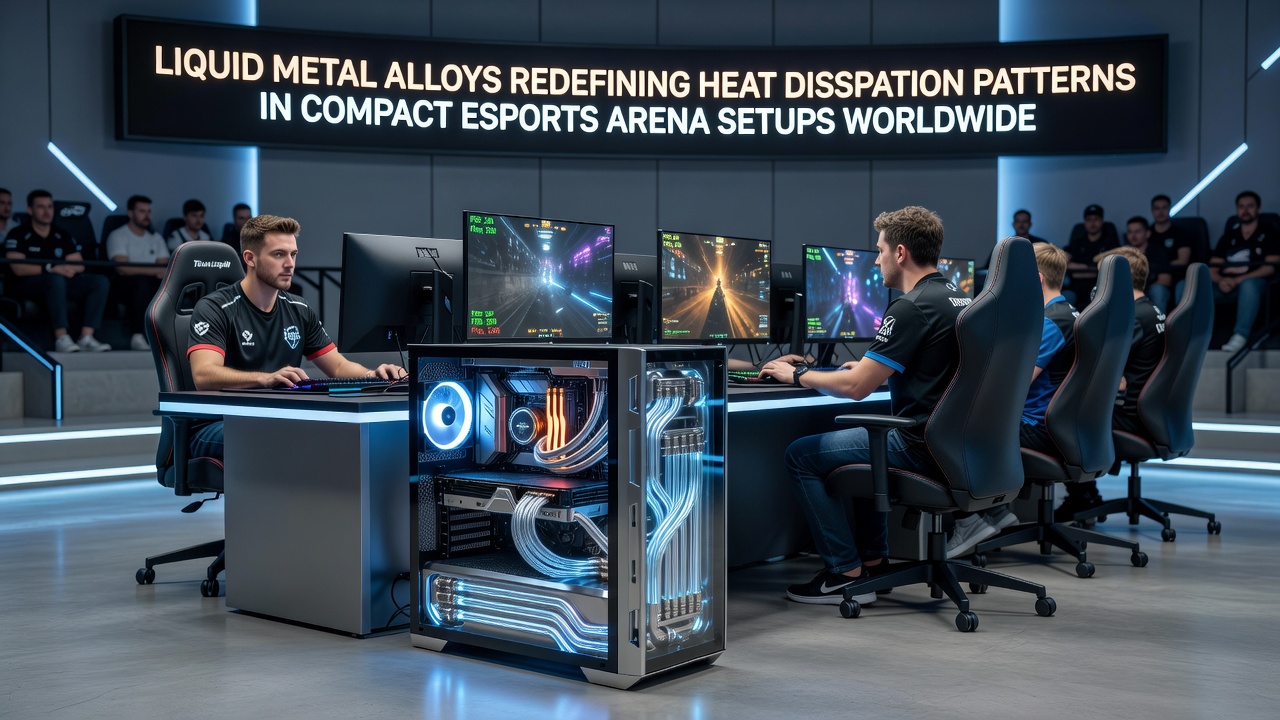
Supply chain reports from research institutions in the Asia-Pacific region note increasing use of recycled gallium sources, which supports consistent material availability without expanding primary mining operations. Arena designers now specify standardized quick-connect fittings that accommodate these alloys, reducing installation times during venue build-outs.
Compatibility and Maintenance Considerations
Engineers address potential oxidation by applying thin protective layers inside reservoirs and tubing, while sensors monitor fluid levels to detect any micro-leaks early. Maintenance crews in major leagues follow protocols that include annual fluid analysis, confirming that alloy composition remains stable after thousands of operational hours. Those overseeing tournament hardware emphasize compatibility checks with existing motherboard layouts, ensuring pumps and manifolds align with standard form factors used in esports PCs.
Emerging Standards and Future Infrastructure
International standards bodies have begun drafting guidelines for liquid metal thermal management in gaming environments, focusing on safety thresholds and electrical isolation requirements. University laboratories continue to publish findings on alloy variants optimized for lower melting points, which could further simplify startup procedures in cooler climates. Trade organizations representing hardware manufacturers have highlighted these developments in technical briefings, noting integration pathways that align with existing power delivery architectures.
Conclusion
Liquid metal alloys continue to reshape thermal strategies in compact esports arenas by delivering measurable improvements in heat transfer efficiency and spatial economy. Worldwide deployments demonstrate consistent operational benefits, supported by ongoing research into material formulations and system integration techniques. As venue designs evolve, these alloys provide a scalable foundation for managing the thermal demands of next-generation hardware configurations.