Industry Reports Detail How Component Shortages Are Driving Custom Builds in Amateur Esports Training Facilities
Cameron Beck · Oct 8, 2026
Industry Reports Detail How Component Shortages Are Driving Custom Builds in Amateur Esports Training Facilities
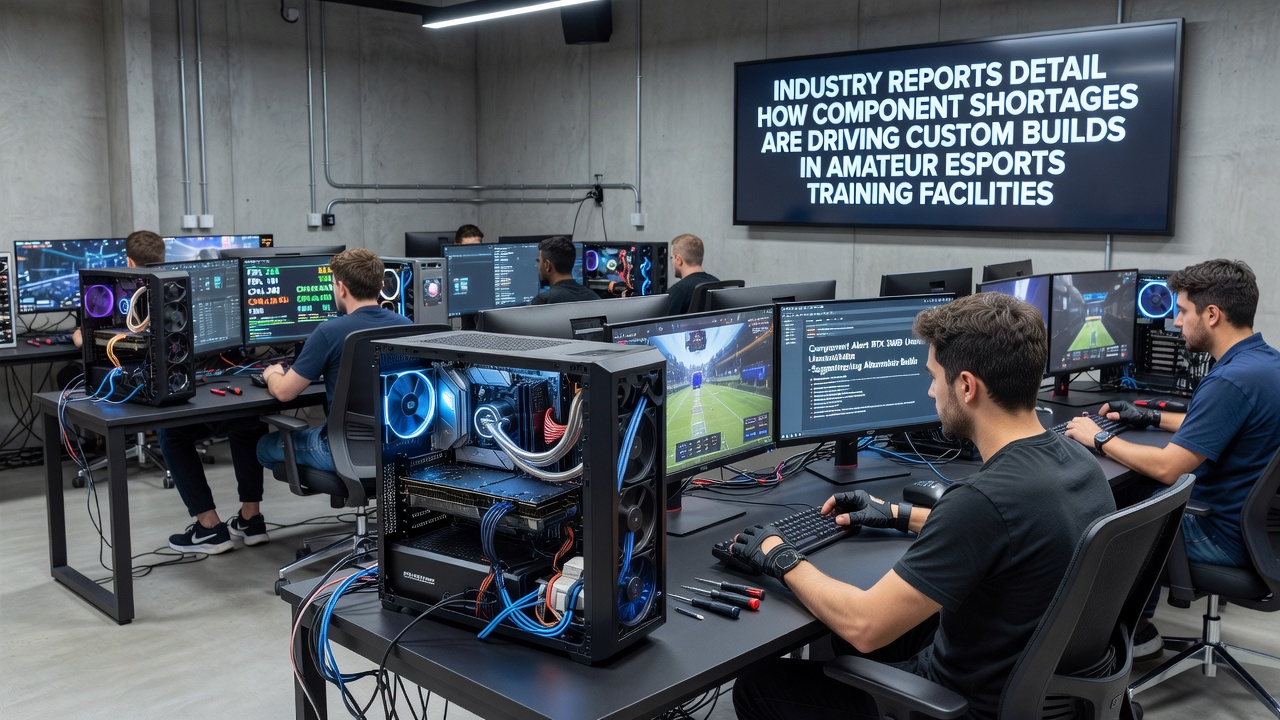
Component shortages continue reshaping supply chains for electronics in 2026, and industry reports track how these constraints push amateur esports training facilities toward custom builds instead of off-the-shelf systems. Data from semiconductor tracking organizations show persistent gaps in GPU availability, memory modules, and specialized input hardware that started during earlier global disruptions and extended into October 2026.
Supply Chain Pressures on Gaming Hardware
Analysts at the Semiconductor Industry Association note that production delays for advanced graphics processors and high-speed DRAM have reduced stock levels at major distributors by significant margins. Facilities that once ordered preassembled rigs now face wait times exceeding several months, so operators examine component sourcing through smaller vendors and secondary markets. Reports compiled by the European Chips Act monitoring body indicate similar patterns across EU member states, where import volumes for consumer-grade GPUs dropped 18 percent year-over-year through mid-2026.
Those managing amateur training centers report that standard configurations often omit the precise specifications needed for competitive play, including low-latency networking cards and multiple monitor outputs. Custom assembly allows direct selection of compatible parts, which reduces compatibility issues that prebuilt units sometimes carry when firmware updates lag behind esports software requirements.
Shift Toward In-House Assembly Practices
Training facilities in North America and Asia have documented increased investment in internal assembly teams. A study released by researchers at the University of California, Irvine examined 47 amateur centers and found that 62 percent now maintain at least partial in-house construction capabilities, up from 29 percent recorded in 2023 data. Technicians source motherboards, power supplies, and cooling solutions from regional suppliers that maintain steadier inventory than global retailers.
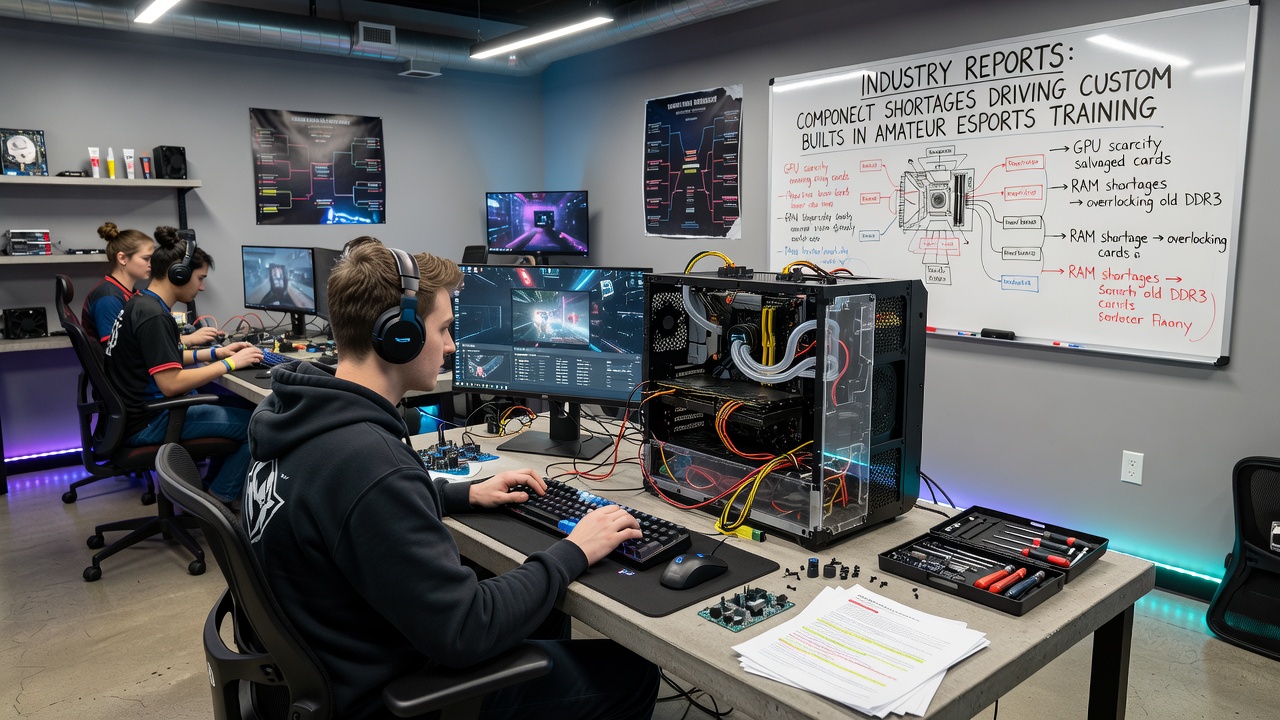
Observers note that this approach also supports iterative upgrades, because individual components can be swapped without replacing entire systems. One facility in Seoul described ordering bare chassis and installing verified secondhand GPUs that passed stress testing protocols, which cut per-station costs while maintaining frame-rate consistency required for training sessions.
Regional Variations and Sourcing Strategies
Industry reports compiled by Canada's Centre for Digital and Media Technology highlight differences in how shortages manifest by geography. Facilities in provinces with stronger local electronics manufacturing report shorter lead times for certain passive components like capacitors and heat sinks, yet still encounter bottlenecks for high-end processors. In contrast, centers in remote areas rely more heavily on group purchasing agreements with other amateur leagues to secure bulk allocations when stock appears.
Custom builds also incorporate alternative cooling solutions and power delivery boards that avoid contested parts. Data from the Global Supply Chain Institute shows that facilities adopting these modular approaches experienced 34 percent fewer downtime events during peak tournament preparation periods in 2026 compared with centers dependent on commercial vendors.
Training Outcomes and Equipment Longevity
Performance tracking at multiple amateur sites reveals that custom-configured stations often match or exceed the stability of retail systems once initial setup completes. Reports from the Asia-Pacific Esports Federation indicate that facilities using hand-selected parts logged higher average training hours per machine because repair cycles shortened when technicians understood every subsystem. This pattern holds particularly for peripherals, where shortages of specific mouse sensors and keyboard switches prompted teams to integrate modular designs that accept interchangeable parts from multiple manufacturers.
October 2026 updates from component distributors show gradual improvement in some categories, yet esports-specific SKUs remain constrained. Facilities that established custom pipelines earlier now maintain spare inventories that allow rapid replacement during events, whereas those waiting on factory orders continue facing scheduling uncertainties.
Conclusion
Industry reports confirm that component shortages have accelerated the adoption of custom builds across amateur esports training facilities worldwide. Data from multiple regions document how operators respond by developing internal sourcing networks, assembly expertise, and modular architectures that sustain competitive training environments despite ongoing supply limitations. These adaptations appear likely to persist as long as production volumes for key semiconductors and related hardware remain below demand levels projected through 2027.