Geopolitical Trade Shifts Reshaping Component Flows for Wireless Input Production in Regional Circuits
Greta Baumann · Aug 26, 2026
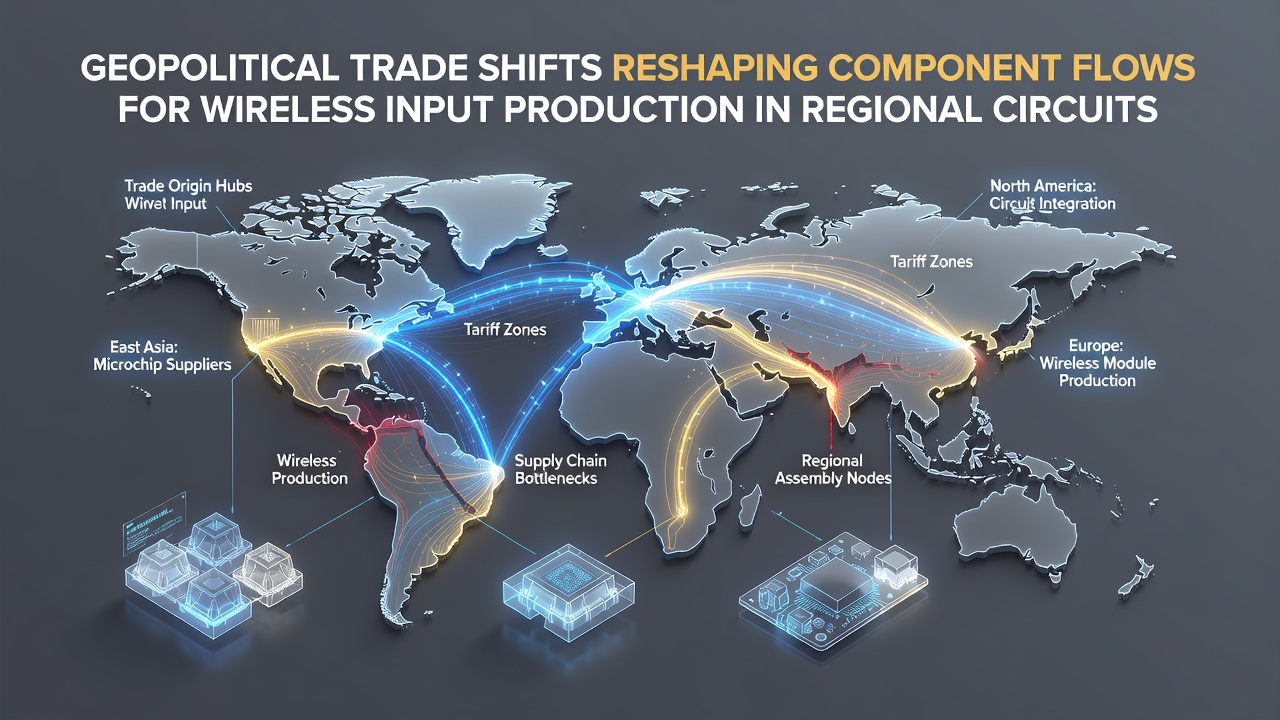
Geopolitical Trade Shifts Reshaping Component Flows for Wireless Input Production in Regional Circuits
Trade policies between major economies have redirected sourcing patterns for wireless input device components including sensors, batteries, and microcontrollers since early 2025, and analysts note these changes accelerated through mid-2026. Regional production hubs in Southeast Asia absorbed increased orders for Bluetooth modules and capacitive touch elements while facilities in East Asia adjusted export volumes amid tariff adjustments. Data from industry tracking services indicate that shipments of lithium-polymer cells destined for gaming controllers rose 18 percent through Vietnamese ports in the first half of 2026 compared with the prior year period.
Policy Changes Driving Component Reallocation
Adjustments to semiconductor export controls and new rules of origin requirements under updated free trade agreements altered procurement routes for wireless input manufacturers. Companies sourcing Hall-effect sensors and RF transceivers shifted portions of their supply from traditional East Asian suppliers toward facilities operating under ASEAN frameworks. Reports compiled by the US International Trade Commission document corresponding rises in component imports through Malaysian and Thai assembly zones during the second quarter of 2026.
Manufacturers responded by qualifying alternative suppliers for gyroscope modules and haptic driver chips, and these transitions occurred alongside investments in regional testing infrastructure. Observers tracking bill-of-materials costs recorded stabilization in wireless mouse and keyboard component pricing despite the rerouting, largely because shorter shipping lanes offset some tariff impacts. Production schedules for tournament-grade input devices maintained continuity because firms pre-positioned inventory buffers ahead of the August 2026 implementation dates for several new compliance standards.
Regional Circuit Impacts on Assembly Lines
Facilities serving competitive gaming markets in North America and Europe integrated more components originating from diversified Asian sources, which altered lead times for custom wireless controllers. One study released by the European Commission’s Directorate-General for Trade tracked a measurable uptick in intra-Asian component transfers feeding final assembly operations located closer to end markets. These movements reduced average transit durations for finished wireless input products by approximately nine days on trans-Pacific routes.
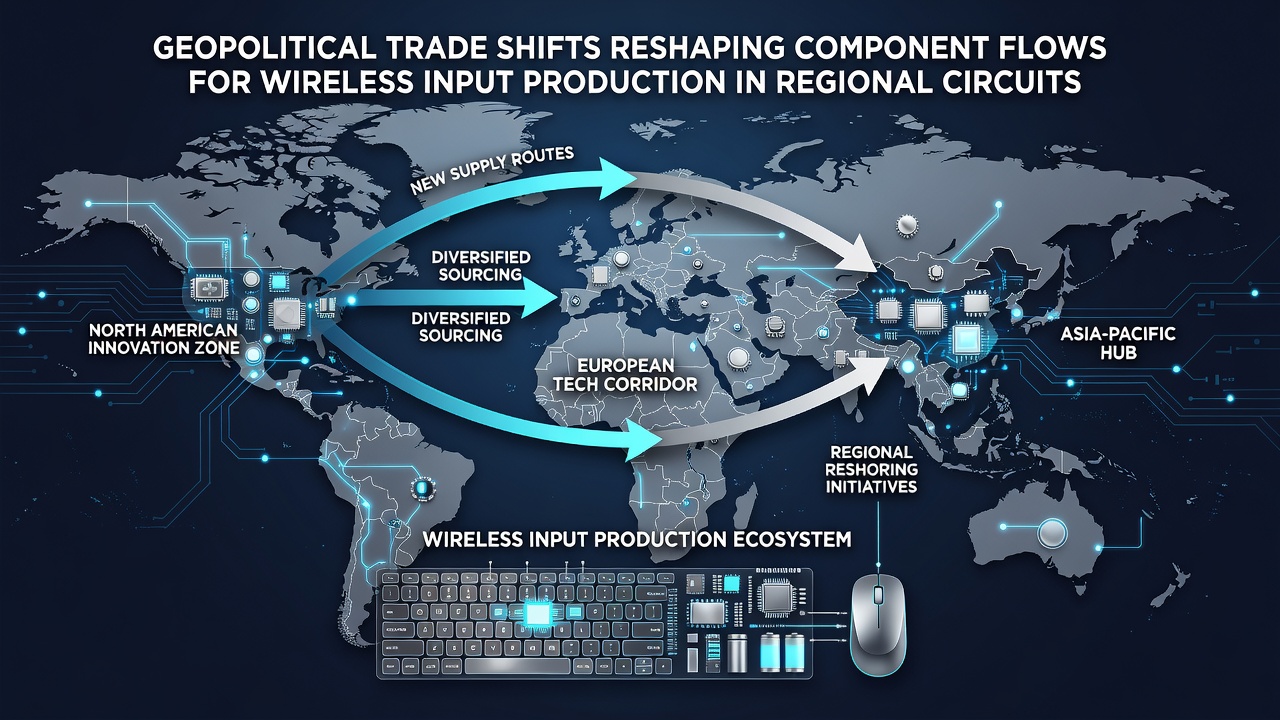
Local suppliers in Mexico and Eastern Europe expanded capacity for enclosure molding and final calibration of wireless devices, yet they continued to rely on imported printed circuit boards and antenna assemblies. Trade statistics compiled by Japan’s Ministry of Economy, Trade and Industry show steady export growth of specialized flexible printed circuits to these emerging assembly clusters throughout 2026. The resulting supply networks now feature multiple parallel pathways rather than single-source dependencies that characterized earlier configurations.
Material and Technology Adjustments
Component redesigns accompanied geographic shifts as engineers substituted certain rare-earth magnets and conductive adhesives with variants available from a broader set of approved origins. Certification bodies documented increased testing volumes for electromagnetic compatibility in wireless input devices assembled under revised sourcing arrangements. Figures released by SEMI, the global electronics manufacturing association, reveal that capital equipment orders for surface-mount technology lines in Vietnam and Indonesia grew steadily during the spring and summer of 2026.
Wireless input producers maintained performance specifications for latency and battery life while navigating these material changes, and data logs from validation labs confirm consistency across batches produced in different regional facilities. Software-defined calibration routines helped compensate for minor variations in sensor tolerances that arose from new supplier qualifications.
Outlook for Continued Adaptation
Further policy announcements scheduled for late 2026 are expected to influence additional categories of passive components used in wireless input production. Industry groups continue to map secondary supplier options for power management integrated circuits and shielding materials. Trade data platforms indicate ongoing monitoring of container volumes moving between key ports as companies refine their multi-regional strategies.
Conclusion
Geopolitical trade measures have prompted measurable redistribution of component flows supporting wireless input device manufacturing across regional circuits. Production networks adapted through supplier diversification, infrastructure investments, and process adjustments that preserved output volumes and product specifications. Ongoing data collection from government agencies and industry organizations will track how these patterns evolve with future policy developments.